

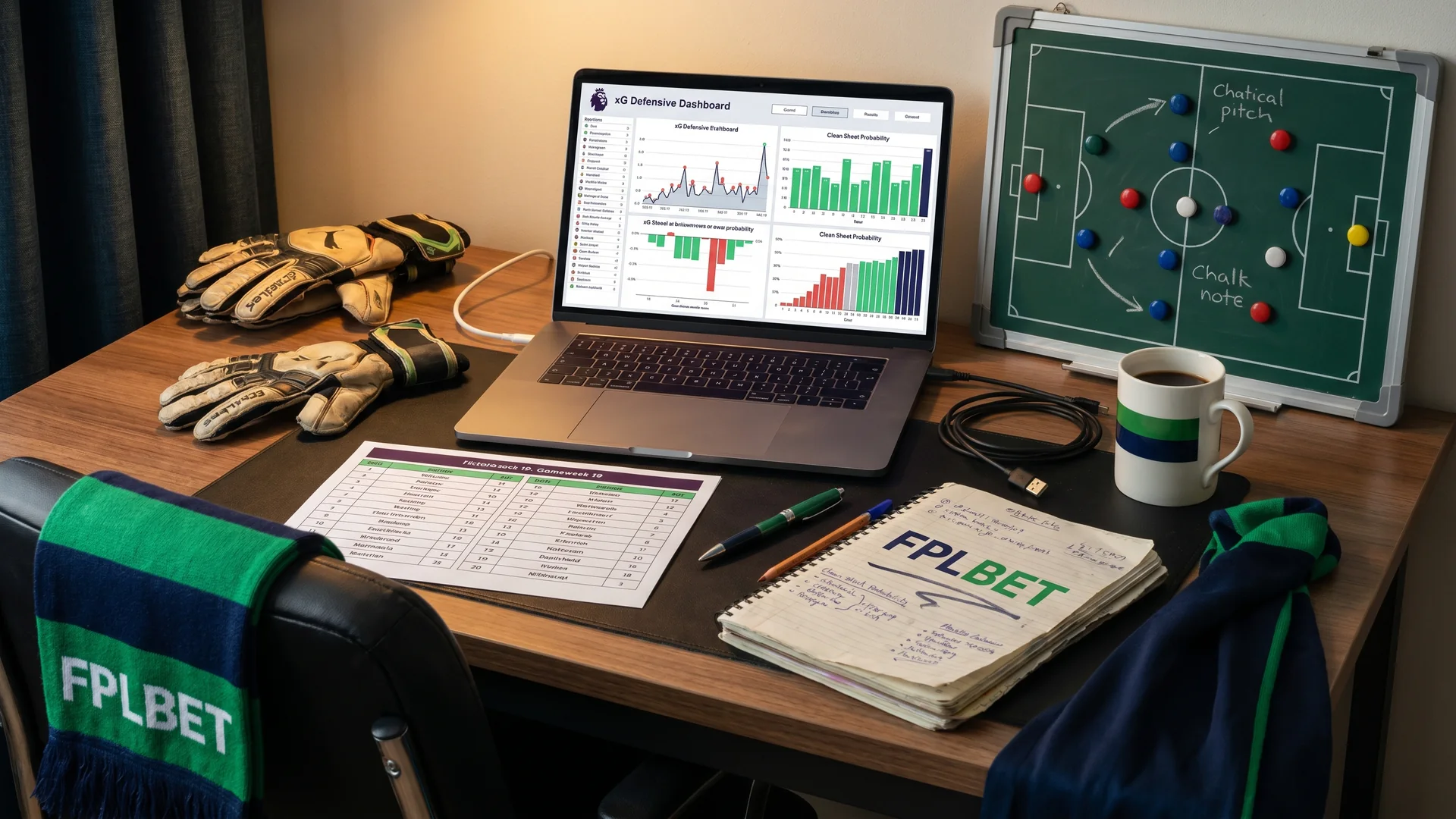
Gameweek 19 clean sheet picks should be based on more than fixture colour. Expected goals conceded, bookmaker clean-sheet odds, opponent shot quality and defensive minutes all help FPL managers avoid weak defensive traps.
Shows quality of chances a defence allows.
Rank clean sheet routes and save upside.
Green fixtures can still hide poor defensive data.
Quick Answer
Gameweek 19 clean sheet picks should be based on more than fixture colour. Expected goals conceded, bookmaker clean-sheet odds, opponent shot quality and defensive minutes all help FPL managers avoid weak defensive traps.
Key Takeaways
- Use the format as part of a wider decision process, not a shortcut.
- Check current rules, pricing, fixtures and deadlines before acting.
- Prioritise repeatable signals over hype.
- Match strategy to risk level and contest type.
- Use FPLBET interlinked guides for deeper research.
Why xG Matters for Clean Sheets
Expected goals conceded helps separate lucky clean sheets from sustainable defending. A team may have kept two clean sheets while allowing big chances; another may concede once but allow very little quality.
How to Pick Gameweek 19 Defenders
Start with nailed minutes. Then compare opponent implied goals, recent xG conceded, set-piece threat and attacking role. Full-backs remain more attractive when clean-sheet odds are similar.
Goalkeeper Strategy
A goalkeeper on a strong clean-sheet team can be useful, but save volume matters. Underdog keepers can outscore favourites if they face many low-quality shots and still have a realistic clean-sheet route.
| Factor | Why It Matters |
|---|---|
| Clean-sheet odds | Market view of defensive probability |
| xG conceded | Chance quality allowed by the team |
| Shots conceded | Volume pressure on defence |
| Set-piece weakness | Corner/free-kick risk |
| Attacking role | Bonus points beyond clean sheets |
Best Use
Use this guide to structure your research before making transfers, entering contests or following advice from other creators.
Common Mistake
The biggest mistake is acting on one signal alone. Always combine fixtures, role, price, rules and risk.
Why Expected Goals Matter for Clean Sheets
Clean sheets can be misleading if you only look at the final score. A team can keep a clean sheet while allowing several big chances, or concede once despite defending well. Expected goals helps separate the result from the defensive process. For Gameweek 19, the best FPL defensive picks are usually teams that limit quality chances, not simply teams that avoided conceding last week.
How to Compare Defensive Fixtures
Start with the opponent’s attacking profile. Do they create shots in the box? Are they dangerous from set pieces? Are their best forwards available? Then compare that with the defending team’s xG conceded, shots conceded and home/away performance. A good fixture is one where the opponent struggles to create the exact type of chance they need.
Defender Selection Beyond Clean Sheets
Even when a clean sheet looks likely, player selection still matters. Full-backs can add assists and bonus potential. Centre-backs can offer set-piece threat. Goalkeepers may need save volume to justify a pick. If two teams have similar clean-sheet chances, choose the player with more ways to score points.
Practical Checklist for Gameweek 19 Clean Sheet Expected Goals: FPL Defensive Tips
Before acting on this guide, turn the idea into a short checklist. Confirm the latest team news, likely starters, fixture context, scoring rules and any price or ownership changes that affect the decision. Then ask whether the original argument still makes sense for your squad, contest or betting slip. If the case depends on one uncertain assumption, reduce risk or wait for better information.
How to Use This Guide Without Overreacting
The purpose of this article is to improve the decision process, not to create a guaranteed pick. Football outcomes are noisy. A strong process can lose because of an injury, a red card, a missed chance or a tactical change. A weak process can win once and still be dangerous long term. Review whether the reasoning was sound after the event, not only whether the result landed.
Common Mistakes to Avoid
The most common mistake is copying a recommendation without checking whether it fits your own situation. In FPL, that means ignoring team structure, chips, captaincy and transfer plans. In DFS, it means ignoring scoring rules and contest size. In betting, it means ignoring price and bankroll. Use the guide as a framework, then make the final decision based on current information.
Final Decision Framework
A strong final decision should pass three tests. First, the logic must be clear: you should be able to explain why the pick, transfer, contest entry or angle makes sense in one or two sentences. Second, the timing must be right: late team news, price movement or rule changes should not undermine the idea. Third, the downside must be acceptable. If the choice fails, it should not damage the whole squad, bankroll or strategy.
What to Track Going Forward
After using this guide, track the signals that mattered most. For fantasy football, that may mean minutes, expected goal involvement, set pieces, defensive data and fixture quality. For reviews or platform guides, it may mean rules, fees, usability and reliability. Keeping notes makes future decisions easier and prevents the same mistake from being repeated when a similar situation appears later in the season.
Before You Move On
Use the page as a living checklist rather than a static answer. Revisit the assumptions when fixtures, prices, line-ups, injuries or platform rules change, because football advice becomes weaker when the context moves. The best value comes from combining the framework here with fresh information before the deadline.
Important Note
This guide is informational. Football fantasy, betting and contest products involve uncertainty and, where money is involved, financial risk. Always check current terms and play responsibly.
Related FPLBET Guides
FAQ
What is xG conceded?
It estimates the quality of chances a team allows.
Should I pick defenders only from clean-sheet odds?
No. Combine odds with minutes, attacking role and price.
Are goalkeepers good for save points?
Yes, especially when they face volume without being huge clean-sheet underdogs.
Final verdict: Gameweek 19 Clean Sheet Expected Goals: FPL Defensive Tips is most useful when treated as a structured decision guide rather than a one-click answer.
Final checks before using this guide
Use Gameweek 19 Clean Sheet Expected Goals: FPL Defensive Tips as a structured starting point rather than a shortcut. The strongest decisions come from combining the article context with current team news, expected minutes and the way the match is likely to be played. If any of those factors change close to kick-off, the best pick or betting angle can change with it.
For fantasy football, pay special attention to secure starters, set-piece roles and players who are involved in repeatable actions such as shots, chances created, crosses, tackles or saves depending on the scoring system. For betting, compare the likely match script with the available price. A selection only becomes useful when the probability looks stronger than the odds suggest.
It is also worth separating safe choices from high-upside choices. Safe options are useful when protecting rank, bankroll or contest position. Higher-upside options can make sense when chasing, but they should still have a clear route to points or value. Avoid decisions based only on a name, one recent result or a short highlight clip.
Before the deadline, check whether the article still matches the latest information. Injuries, suspensions, weather, fixture congestion and tactical changes can all shift the balance. When the same signal appears across form, role, matchup and price, the decision is usually much stronger.