

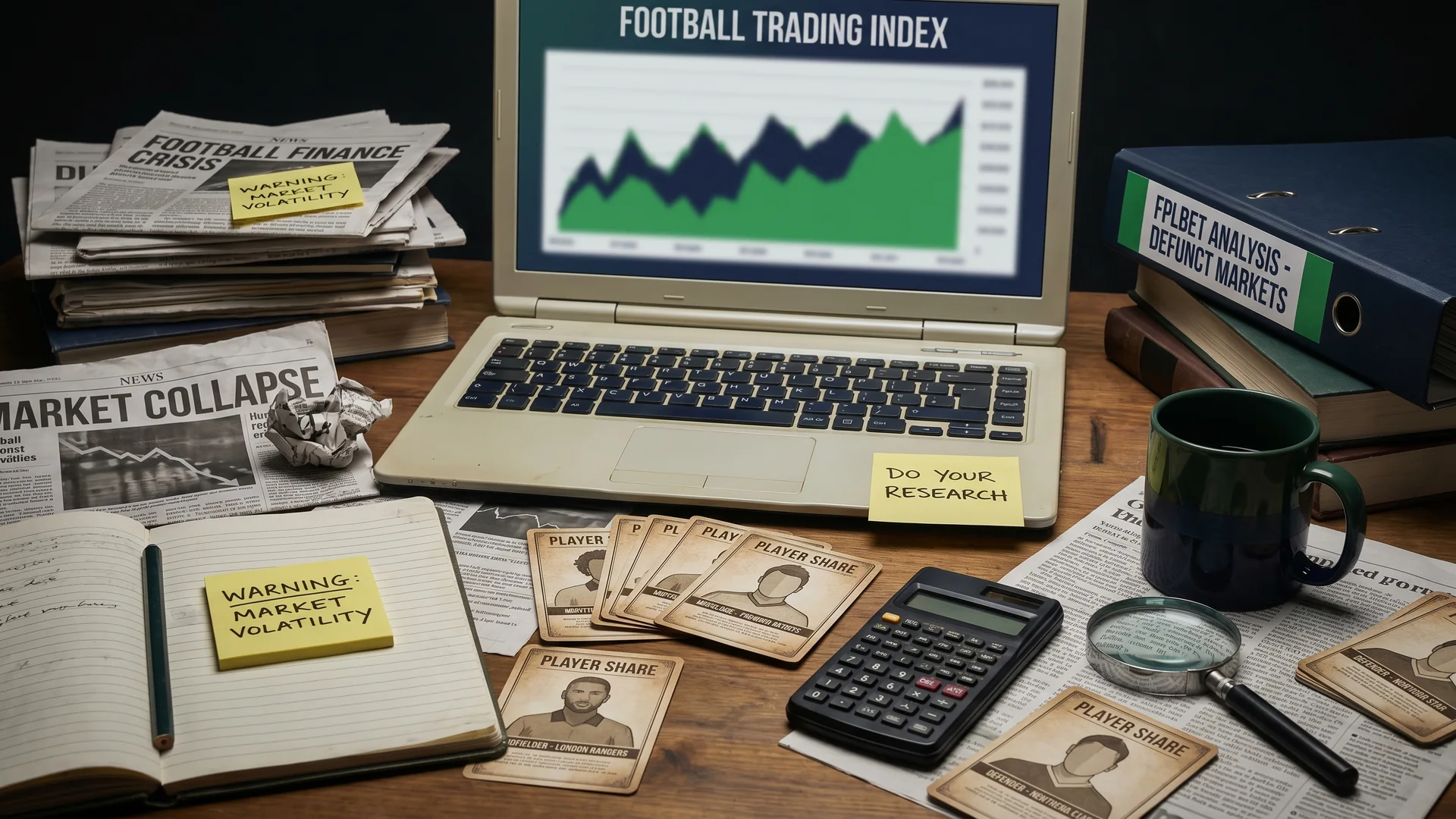
This Football Index review is kept for searchers who still find old FPLBET links and want the full context. Football Index was once promoted as a football stock market, but it is no longer a live product to recommend. The useful angle now is historical: how it worked, why users were attracted to it, what went wrong, and what bettors and fantasy football players should learn before trusting any platform with real money.
Not a current betting or fantasy product recommendation.
Users bought footballers and chased dividends or resale value.
Rules, liquidity and company stability mattered more than picks.
Quick Answer
Football Index was a football trading platform where users bought and sold player “shares” and could earn dividend-style returns. It collapsed in 2021, after which official reviews looked at how the product had been regulated. For modern users, Football Index is best treated as a cautionary case: even if your football analysis is strong, you can still lose if the platform rules, liquidity or operator fail.
Key Takeaways
- Football Index is not active as a normal product and should not be treated as a recommendation.
- The old appeal was simple: combine football knowledge with market-style buying and selling.
- The biggest weakness was not player selection; it was trust in liquidity, dividends and the operator.
- Any similar product should be judged on regulation, withdrawals, terms, customer-fund protection and rule-change risk.
- For active play today, use transparent fantasy contests, regulated bookmakers and responsible bankroll rules.
What Was Football Index?
Football Index was a real-money football product built around the idea of a “stock market” for players. Instead of backing one match result, users bought positions in footballers. The hope was that a player’s price would rise, or that the player would generate dividend-style returns through media attention, match performance or other platform rules.
That made it feel different from a normal bookmaker. Users could research young prospects, transfer rumours, fixture runs, international tournaments and high-profile stars. A good trader wanted to buy before the market noticed and sell when hype, form or dividends made the player more valuable.
How Football Index Worked
The basic idea was easy to understand, which was part of its appeal. A user would deposit money, buy player shares, monitor price movements and decide whether to hold or sell. In theory, value came from two places: resale price and dividends. In practice, both depended heavily on platform confidence and the rules set by the operator.
Old strategy content often focused on scouting players, spotting media-friendly names, understanding dividend tables and reacting faster than casual users. Those skills mattered while the market was functioning. But the collapse showed that product structure can overwhelm football analysis. A strong player pick does not protect you if liquidity dries up or the dividend model changes.
| Old Football Index Feature | What Users Looked For | Modern Lesson |
|---|---|---|
| Player shares | Buying footballers expected to rise in value | Understand exactly what you own and whether you can exit |
| Dividends | Returns linked to media or performance rules | Read how rewards are funded and whether rules can change |
| Transfer rumours | Buying before a player moved club or became newsworthy | Hype can create short-term movement but also sharp reversals |
| Liquidity | Selling positions when demand existed | An apparent balance is not the same as cash withdrawn |
| Regulation | Trust that the product was being monitored properly | Check who regulates the product and what protection actually exists |
Was Football Index Any Good?
As an idea, Football Index was interesting. It rewarded football research, created long-term debate around players and gave users more to think about than a single 90-minute result. For experienced football fans, the product felt strategic: scouting, timing, market psychology and squad news all had a role.
But a review has to judge the full outcome, not just the concept. The end result was severe customer harm and a product that became a warning rather than a model to follow. A platform can be clever and still be too risky if customers do not fully understand how prices are sustained, how withdrawals work, and what happens when confidence drops.
What Users Liked
The product gave football fans a reason to research players beyond match odds. Long-term holds, transfer speculation and dividend hunting made it feel deeper than basic betting.
What Went Wrong
The model depended on trust, liquidity and rules. Once confidence broke, users learned that football knowledge could not remove platform and counterparty risk.
What Happened to Football Index?
Football Index collapsed in 2021. The UK Gambling Commission suspended BetIndex Limited’s licence in March 2021, and the UK government later published an independent review into the regulation of BetIndex, the company behind Football Index. The case became a major example of why complex gambling products need clearer oversight and why users should not assume that a regulated product removes every risk.
For FPLBET readers, the key takeaway is practical: do not treat platform balances, promotional claims or historical returns as guaranteed. If a product depends on other users buying in, on a company maintaining a dividend promise, or on unclear market liquidity, you need to judge the business risk as well as the football angle.
Who Would Football Index Have Suited?
Before the collapse, Football Index appealed most to users who enjoyed long-form football research. It suited people who followed transfer markets, youth prospects, media narratives and fixture changes. It was less suitable for users who wanted simple bookmaker odds, fast settlement or clear maximum downside.
Today, nobody should approach Football Index as an active option. The better use of this review is educational. If a new product claims to combine football trading, fantasy strategy and real-money returns, ask harder questions before depositing.
Important Warning
This page is not financial advice and not a recommendation to use Football Index or any similar product. Football betting, fantasy contests and trading-style gambling products can all involve real-money losses. Check current regulation, withdrawal rules, terms and responsible gambling tools before using any platform.
Safer Checklist for Similar Platforms
If you ever assess a football trading or fantasy-money product, look past the marketing. A good football idea is not enough. You need proof that the product is transparent, properly regulated, easy to exit and honest about the risks users are taking.
| Question | Why It Matters |
|---|---|
| Who regulates it? | Different regulators and licences can mean different consumer protections. |
| Are customer funds protected? | Deposited balances may not always be ring-fenced in the way users expect. |
| Can rules change suddenly? | Dividend or reward changes can alter the value of positions overnight. |
| How do withdrawals work? | A number on screen is less important than actual access to cash. |
| What happens if demand disappears? | Market-style products can become hard to exit when buyers vanish. |
Football Index Review Verdict
Football Index had an engaging concept, but the final verdict is negative because the product failed its users. The historical lesson is bigger than one brand: do not confuse football knowledge with platform safety. A sharp user can still lose if the product mechanics, operator finances or regulatory protections are weak.
If you want active football content today, focus on transparent fantasy football games, clear bookmaker terms and research-led guides where the risk is obvious before you play.
FAQ
Is Football Index still available?
No. Football Index should be treated as a historical product and cautionary case, not as a current recommendation.
Was Football Index a bookmaker?
It was regulated as a gambling product, but it used market-style language around buying and selling player shares. That mix is one reason the collapse attracted regulatory scrutiny.
Could users make money on Football Index?
Some users may have made money while the market functioned, but the collapse showed that individual strategy did not remove platform risk.
What is the main lesson from Football Index?
Always assess the operator, rules, liquidity, withdrawal process and consumer protection before trusting any real-money football platform.
Final verdict: Football Index is best remembered as a useful warning. Good football research matters, but platform safety, clear rules and responsible bankroll control matter more.